
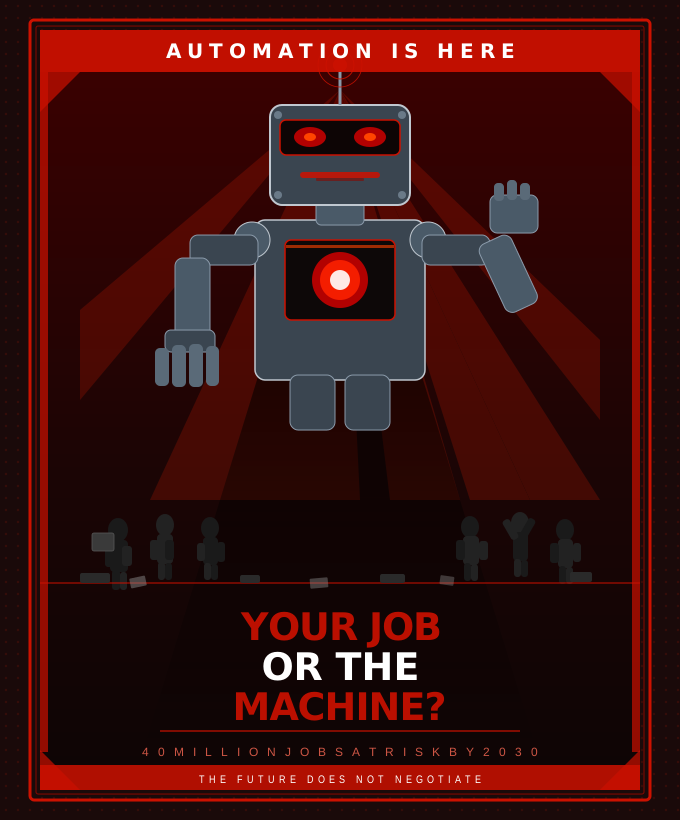
AI vs Human Employees: Are We Facing a Job Apocalypse?
The rise of artificial intelligence (AI) and automation has sparked an ongoing debate that’s divided experts, business owners, and workers alike: Is AI going to take our jobs, or is it the next evolutionary step in the workforce?
With every new advancement in AI technology, from chatbots to advanced machine learning algorithms, the question becomes more pressing. While many view AI as a powerful tool to enhance productivity, others are concerned that the rise of AI will lead to widespread job displacement, rendering human employees obsolete.
In this blog, we’ll dive into the controversy and explore whether we’re truly facing a job apocalypse or if this is just the next phase in workforce evolution. Spoiler alert: there’s no clear-cut answer. But the future of work depends on how businesses navigate this transformation.
The “Job Apocalypse” Myth: A Closer Look
When AI and automation are discussed in the media, it’s often framed as a dystopian future where machines take over all human labor, leading to mass unemployment. This has led to the rise of the “Job Apocalypse” narrative—where robots will eventually replace workers in nearly every industry.
However, many experts argue that this narrative is overly simplistic. Sure, some jobs, especially repetitive and manual tasks, may be at risk of automation. But history has shown that technological advancement doesn’t simply eliminate jobs—it changes them. Think of the rise of the personal computer, the internet, or even the advent of smartphones. These innovations didn’t just replace jobs; they created entirely new industries and opportunities for people to thrive.
While it’s true that AI is automating tasks traditionally performed by humans, it’s important to recognize that AI can also augment human capabilities. The collaboration between AI and human employees can lead to higher productivity, more creative work, and the ability to focus on strategic decision-making rather than mundane tasks.
Why This Matters:
Instead of fearing AI as a job-stealer, businesses should embrace it as a tool that can free up human workers to do more meaningful work. Companies that successfully implement AI will see greater innovation, higher employee satisfaction, and the ability to scale more effectively.
The Dark Side: AI’s Impact on Job Quality
While some industries will undoubtedly create new roles in response to AI, we can’t ignore the downsides of automation. AI-driven job displacement can exacerbate income inequality and leave workers who aren’t equipped with the right skills behind.
Take manufacturing jobs as an example. Automation has already displaced a significant number of workers in factories, and many of those workers don’t have the necessary skills to transition to more technical roles. The problem is compounded by the fact that not every country or business has the resources to upskill displaced workers.
The issue isn’t just about losing jobs—it’s about the quality of jobs that remain. Are these jobs flexible, rewarding, and aligned with workers’ goals? Or will we end up in a world where the few who can adapt thrive, while the many are left behind in lower-paying, less satisfying roles?
Why This Matters:
Businesses need to invest in training programs to reskill their workforce, especially in areas like data analytics, AI programming, and strategic decision-making. Otherwise, they risk creating a massive divide between skilled workers and those displaced by automation.
Human Employees: Irreplaceable—But Not Without Change
It’s not all doom and gloom for human employees. In fact, many roles are still inherently human and unlikely to be replaced by AI in the foreseeable future. Fields that require creativity, emotional intelligence, and strategic thinking—such as leadership, marketing, and customer service—will always need the human touch.
AI can support these roles, but it will never replace the essential qualities of human workers: empathy, intuition, and ethical decision-making.
However, to stay competitive, human workers will need to adapt. As AI becomes more integrated into business processes, human employees will need to focus on higher-value work that requires judgment, complex problem-solving, and interpersonal skills.
Why This Matters:
This creates an opportunity for businesses to empower their employees to do more meaningful work. Instead of fearing AI as a replacement, companies can use it to help employees shift their focus to tasks that require critical thinking and creative problem-solving.
The Real Challenge: Striking the Right Balance
So, are we truly on the brink of a job apocalypse? The answer is far more complex. While AI will undoubtedly change the landscape of employment, it’s also a tool that can help businesses innovate, grow, and create new opportunities for employees. The key isn’t to fear AI, but to strategically integrate it in ways that benefit both businesses and their workers.
The real challenge for organizations is to strike the right balance between leveraging AI and maintaining a skilled human workforce. This means not just focusing on automation but also on investing in employee development, ensuring that workers are equipped to thrive in the future of work.
At Astrav Consulting, we help businesses navigate this delicate balance. Whether you’re looking to integrate AI into your workflow, develop training programs, or redefine roles to align with the future of work, we provide the expertise you need to make it happen.
Why Astrav Consulting?
- Strategic AI Integration: We help you understand where AI can make a real impact on your business, without displacing your most valuable asset—your employees.
- Workforce Transformation: We assist in reskilling your workforce to adapt to new roles and responsibilities, ensuring your team stays ahead of the curve.
- Long-Term Workforce Planning: We help you build a sustainable, adaptable workforce that thrives in the AI-driven future of work.
As AI continues to evolve, the right strategy will ensure that both your technology and your employees work in harmony to create long-term growth. Let Astrav Consulting guide you through this transformation, ensuring that you’re not just surviving the AI revolution, but thriving in it.
Conclusion: Don’t Fear AI—Master It
In conclusion, the rise of AI presents both challenges and opportunities. While some jobs will inevitably be displaced, AI is also creating a wealth of new roles and possibilities. The future of work will require a combination of human creativity and AI efficiency, and the organizations that succeed will be the ones that can balance both.
It’s not a job apocalypse—it’s the dawn of a new era in the workforce. The key is to adapt, upskill, and embrace change.
Are you ready to navigate the future of work? Contact Astrav Consulting today, and let’s build a strategy that keeps your business and employees ahead of the curve in the AI-driven world.
Disclaimer: The views expressed in this article are based on current industry trends and insights. We are committed to helping businesses strategically implement AI while safeguarding the future of their workforce.