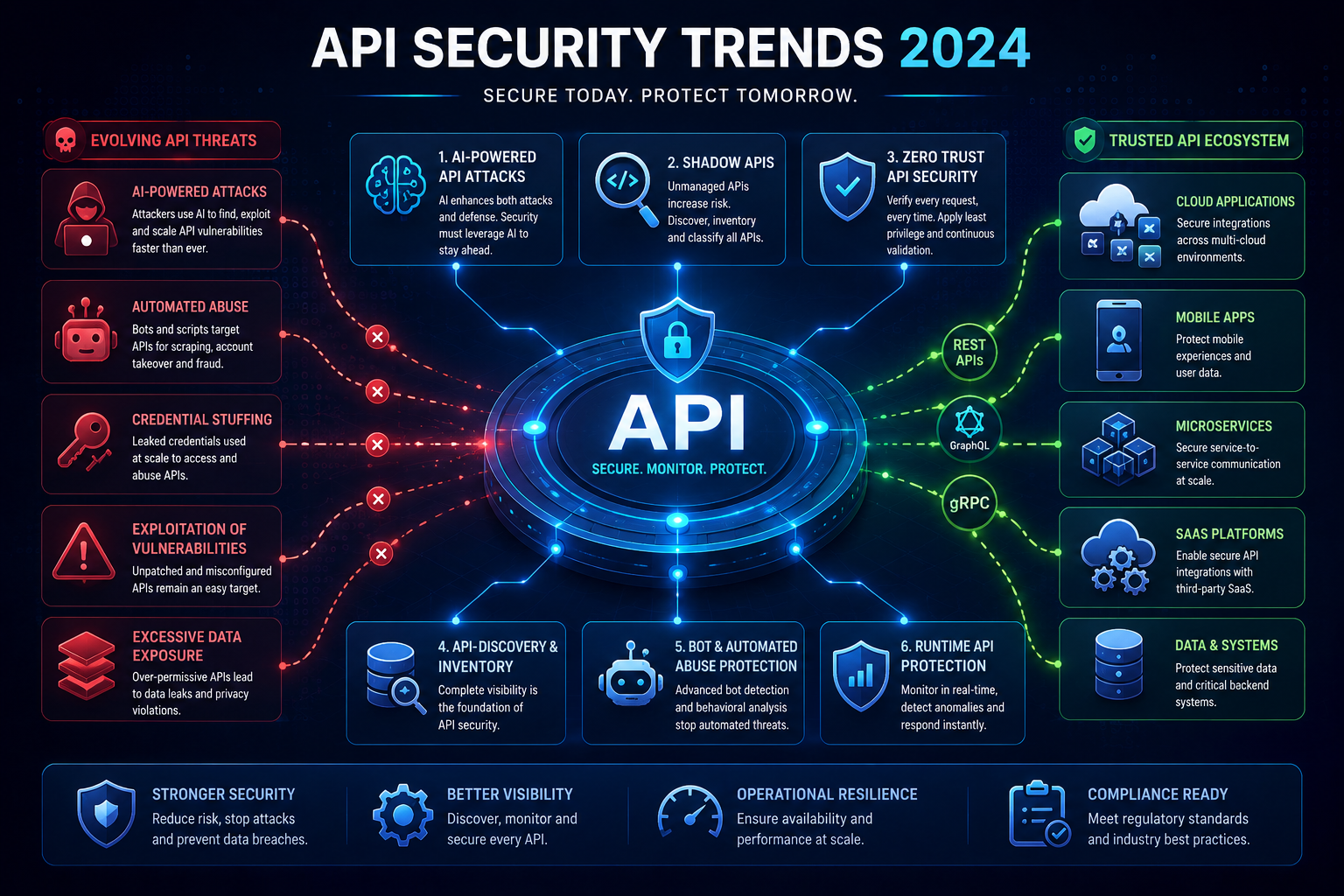
The API Security Problem
APIs have become the nervous system of modern applications. Yet API security remains the most overlooked attack surface. According to recent industry data:
- 72% of organizations experienced an API security incident in the past 18 months
- 41% lack visibility into all APIs running in their infrastructure
- 58% have APIs with excessive permissions (over-privileged)
Enterprise security teams are caught between innovation velocity and risk management. APIs are deployed faster than security teams can audit them.
Top API Vulnerabilities (2024)
1. Broken Object Level Authorization (BOLA)
The Problem: APIs expose resources by ID without verifying the user has access.
GET /api/users/12345/data
# Returns data even if user doesn't own ID 12345
Impact: Attackers can enumerate and access any user’s data by incrementing IDs.
Solution:
- Verify authorization on every endpoint
- Use context-based access controls (is this user the owner?)
- Never trust the client to enforce permissions
2. Excessive Data Exposure
The Problem: APIs return more data than needed (e.g., password hashes, internal IDs).
GET /api/users/profile
{
  "name": "John Doe",
  "email": "john@example.com",
  "password_hash": "bcrypt...", // ← Should never be here
  "internal_user_id": "12345",   // ← Leaks internal schema
  "admin_flag": true             // ← Reveals role
}
Impact: Attackers learn application architecture and extract sensitive data.
Solution:
- Return only necessary fields
- Use API response schemas to enforce data minimization
- Audit API responses quarterly
3. Broken Authentication & Token Management
The Problem: Weak or missing authentication, poorly managed tokens.
Common failures:
- Missing rate limiting on login endpoints
- Tokens stored in query parameters (logged in browser history)
- Long-lived tokens without refresh logic
- No token revocation on logout
Solution:
- Implement OAuth 2.0 or OpenID Connect
- Use short-lived tokens + refresh tokens
- Rate limit authentication endpoints
- Revoke tokens on logout
4. Lack of Resource Throttling
The Problem: APIs allow unlimited requests, enabling DOS and data scraping.
# Attacker can scrape all data by hammering the API
for i in range(1000000):
  GET /api/products/{i}
Solution:
- Implement rate limiting per user/IP
- Use progressive backoff (increase wait time for repeat offenders)
- Monitor for unusual traffic patterns
Detection: How to Find Vulnerable APIs
1. API Discovery Audit
- Catalog all APIs (many organizations don’t know what they have)
- Document expected traffic patterns
- Identify who should have access
2. Traffic Analysis
- Monitor for unusual IDs being accessed
- Look for sequential ID access (BOLA indicator)
- Track response sizes (data exposure indicator)
3. Automated Scanning
Tools like Burp Suite Pro, Postman, and specialized API security platforms can detect:
- Missing authentication
- Excessive data exposure
- Weak rate limiting
Implementation Roadmap
Week 1-2: Discovery
- Inventory all APIs
- Document authentication methods
- Identify critical endpoints
Week 3-4: Assessment
- Test for BOLA vulnerabilities
- Audit response payloads for data exposure
- Check rate limiting configuration
Week 5-6: Remediation
- Implement missing authentication
- Reduce response payloads
- Add rate limiting rules
Ongoing: Monitoring
- Set up continuous API security monitoring
- Alert on suspicious access patterns
- Monthly reviews of new API deployments
Enterprise Best Practices
✅ Implement Zero Trust for APIs — Verify every request, don’t assume internal safety
✅ Use API gateways — Centralized point for authentication, rate limiting, logging
✅ Enforce API versioning — Deprecate old APIs with weak security
✅ Automate security scanning — Test new APIs before production
✅ Monitor token usage — Alert on anomalies
Quick Checklist
- Do you have an inventory of all APIs?
- Is authentication enforced on every endpoint?
- Do APIs rate limit requests?
- Are responses minimizing data exposure?
- Is there monitoring for unusual access patterns?
- Are API tokens short-lived and revokable?
If you answered “No” to more than 2 items, you likely have API security gaps.
Next Steps
Astrav Consulting provides API security assessments and continuous monitoring. We’ll help you:
- Discover and inventory all APIs
- Identify vulnerabilities
- Implement defense-in-depth strategies
Part of our API Security series. Next: Implementing OAuth 2.0 for Enterprise APIs